Endoscopic Submucosal Dissection (ESD)
Advanced endoscopic treatment for precise, scar-free removal of early GI cancers and complex polyps.
What is ESD?
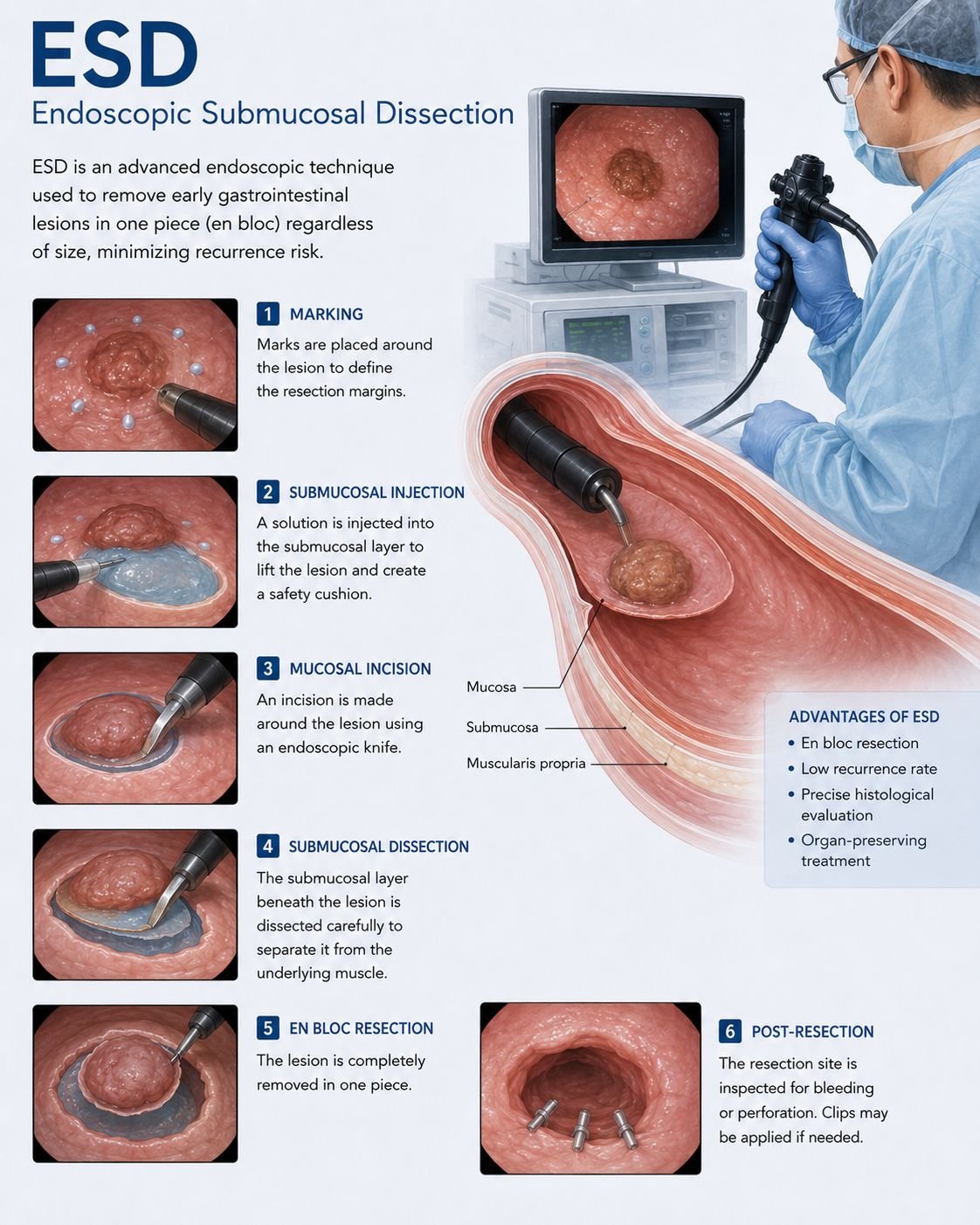
Endoscopic Submucosal Dissection (ESD) is an advanced minimally invasive endoscopic procedure used to remove large precancerous lesions, early cancers, or deep polyps from the gastrointestinal (GI) tract without open surgery.
A gastroenterologist uses a flexible tube called an endoscope with a camera and specialized instruments to carefully cut and remove the lesion in one piece.
Which organs can be treated with ESD?
ESD is commonly performed in:
- Esophagus
- Stomach
- Duodenum (small intestine)
- Colon
- Rectum
It is especially useful for:
- Early GI cancers
- Large flat polyps
- Barrett’s esophagus with dysplasia
- Lesions not removable by routine polypectomy or EMR
ESD provides a more complete removal for large or suspicious lesions.
Pre-procedure Preparation
Before Upper GI ESD (Esophagus/Stomach)
- Fasting for 6–12 hours
- No food or water before procedure
Before Colon/Rectal ESD
- Full bowel preparation
- Clear liquid diet
- Laxatives/PEG solution
Blood Tests May Include
- CBC
- PT/INR
- Kidney function tests
- Viral markers (HBsAg, HCV, HIV)
Medications
Doctors may temporarily stop:
- Blood thinners
- Aspirin/clopidogrel
- Certain diabetes medicines
How is ESD Performed?
Step-by-Step Procedure
-
Patient is given:
- Deep sedation or
- General anesthesia
-
Endoscope is inserted:
- Through mouth for upper GI lesions
- Through anus for colon/rectal lesions
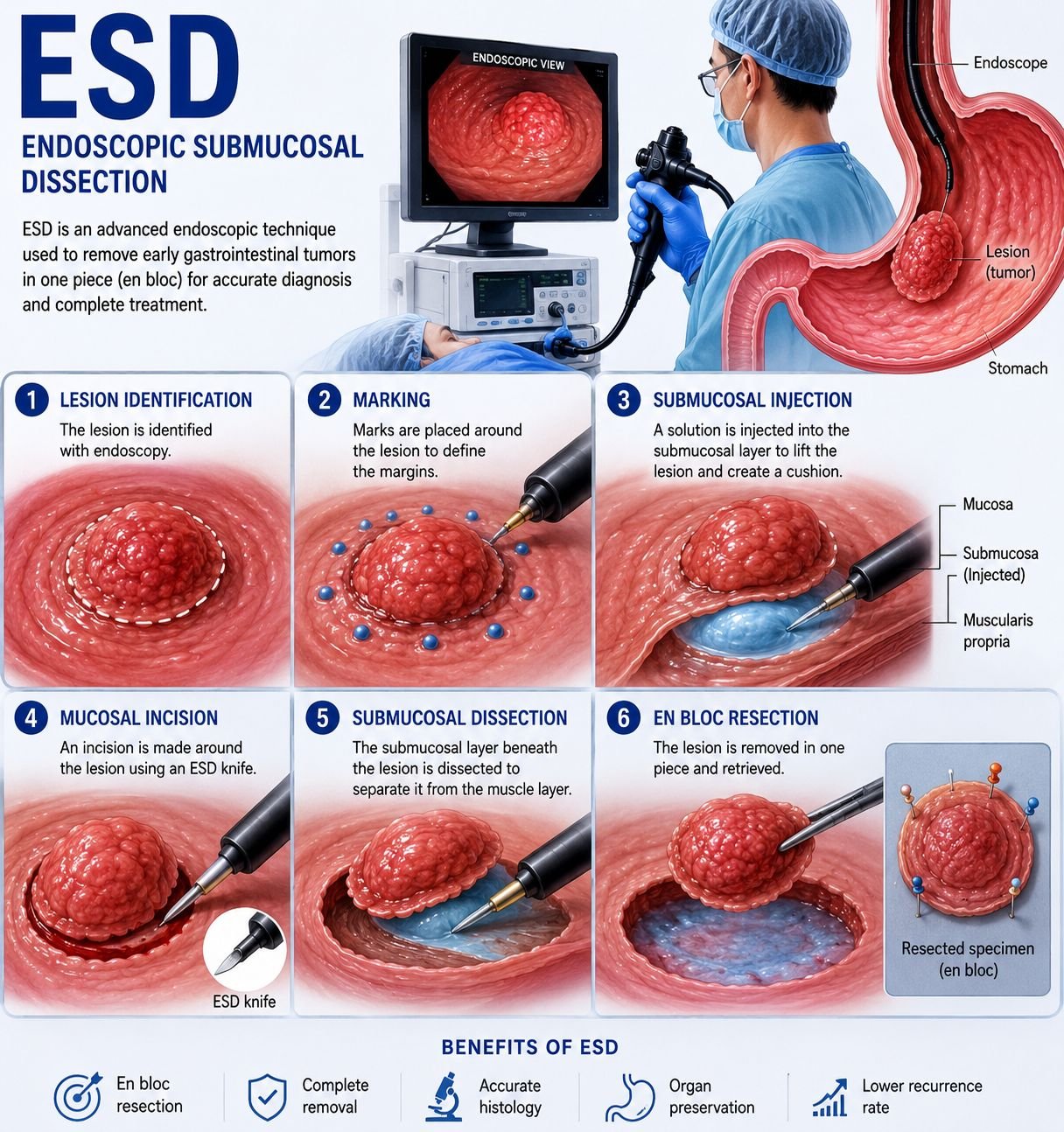
- Lesion is examined carefully.
- Borders are marked.
- Special fluid is injected beneath lesion to lift it away from deeper muscle.
- A specialized electric knife dissects beneath the lesion.
- Entire lesion is removed in one piece.
- Bleeding vessels are coagulated.
- Clips may be applied if needed.
- Specimen is sent for histopathology.
Duration of Procedure
- Usually 1–4 hours
- Complex lesions may take longer
Is ESD Painful?
No. The procedure is done under sedation or anesthesia, so patients generally do not feel pain during the procedure.
Afterwards, mild symptoms may occur:
- Gas
- Bloating
- Cramping
- Mild throat discomfort
- Mild abdominal pain
Usually manageable with medicines.
Hospital Stay
Depends on lesion size and location.
Small/Simple ESD
- Same-day discharge possible
Large or Difficult ESD
- 1–3 days hospital observation
Recovery After ESD
First Few Days
- Soft or liquid diet
- Avoid spicy/heavy foods
- Rest
Recovery Timeline
- Most patients recover within:
- Few days to 1 week
Follow-up
- Histopathology report review
- Repeat endoscopy/colonoscopy may be needed
Advantages of ESD
Organ-Preserving
Avoids removing part of stomach or colon in many patients.
Minimally Invasive
No external cuts or stitches.
Better Cancer Assessment
Lesion removed in one piece gives accurate pathology.
Lower Recurrence
Less chance lesion grows back.
Faster Recovery
Compared to surgery.
Risks and Complications
Though generally safe in expert hands, complications can occur:
Bleeding
Most common complication.
Perforation
Small hole in intestine/stomach wall may occur.
Infection
Stricture/Narrowing
Especially in esophageal ESD.
Need for Surgery
Rarely if complication occurs or cancer is deeper than expected.
Warning Signs After ESD
Seek urgent medical help if you develop:
- Severe abdominal pain
- Fever
- Vomiting blood
- Black stools
- Heavy rectal bleeding
- Breathlessness
- Persistent vomiting
Success Rate
ESD has very high success rates when performed by experienced specialists. Studies show very low recurrence when lesion is completely removed in one piece.
Real Patient Experiences
Many patients describe:
- Procedure longer than routine endoscopy/colonoscopy
- Mild throat discomfort or bloating afterwards
- Recovery over several days
- Relief when surgery is avoided
Some large rectal or colon ESD procedures may require general anesthesia and temporary clips/sutures.
When to Consult a Gastroenterologist for ESD Evaluation?
If reports show:
- Large flat polyp
- Early GI cancer
- Dysplasia
- Non-lifting lesion
- Recurrent polyp after previous removal
A specialist in advanced therapeutic endoscopy can determine whether ESD, EMR, or surgery is best.
Book Your Appointment Today with Dr. Dipak B.
Take the first step towards better digestive health by booking your appointment with Dr. Dipak B.
Get trusted medical guidance and modern treatment tailored to your needs.