Cholangioscopy
Advanced Cholangioscopy for Accurate Diagnosis & Treatment of Complex Bile Duct Disorders
What is Cholangioscopy?
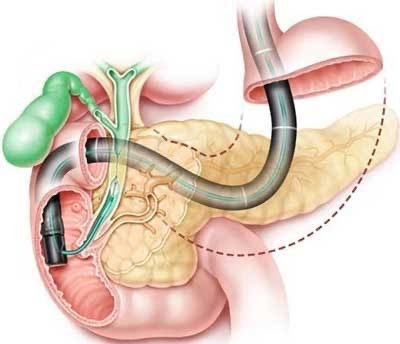
Cholangioscopy is an advanced endoscopic procedure used to directly look inside the bile ducts using a very thin camera called a cholangioscope.
It is usually performed during an ERCP procedure.
The bile ducts carry bile from the liver and gallbladder to the intestine. Cholangioscopy helps doctors diagnose and treat problems inside these ducts with direct visualization.

Why is Cholangioscopy Done?
It is commonly used when routine imaging or ERCP cannot clearly identify the problem.
Common Indications
- Bile duct stones that are large or difficult to remove
- Bile duct strictures (narrowing)
- Suspected bile duct cancer
- Evaluation of abnormal MRI/MRCP or CT findings
- Recurrent jaundice
- Unexplained blockage of bile ducts
- Assessment of primary sclerosing cholangitis (PSC)
- Taking targeted biopsies from suspicious lesions
- Treating difficult stones using laser or electrohydraulic lithotripsy
Symptoms That May Require Evaluation
A doctor may advise cholangioscopy if a patient has:
- Jaundice (yellowing of eyes/skin)
- Severe itching
- Dark urine
- Pale stools
- Fever with chills
- Recurrent abdominal pain
- Abnormal liver function tests
- Dilated bile ducts on imaging
- Recurrent cholangitis (bile duct infection)
How is the Procedure Performed?
Before Procedure
Usually done after:
- Blood tests
- Liver function tests
- Clotting profile (PT/INR)
- Ultrasound / CT / MRCP evaluation
The patient is kept fasting for about 6–8 hours.
Procedure Steps
Step 1: Sedation
The patient is given:
- Deep sedation OR
- General anesthesia
So the procedure is usually painless.
Step 2: Endoscope Insertion
A flexible endoscope is passed through:
- Mouth → food pipe → stomach → small intestine
Step 3: ERCP Access
The bile duct opening (papilla) is identified and accessed.
Step 5: Direct Visualization
The doctor can directly see:
- Stones
- Tumors
- Strictures
- Inflammation
- Bleeding areas
Step 6: Biopsy or Treatment
If needed:
- Targeted biopsy is taken
- Stones are fragmented using laser/electrohydraulic energy
- Stents may be placed
Is Cholangioscopy Painful?
No. Since sedation or anesthesia is given, patients usually do not feel pain during the procedure.
Afterward, mild:
- throat discomfort,
- bloating,
- or abdominal fullness
may occur temporarily.
Duration of Procedure
Usually:
- 30 minutes to 1.5 hours depending on complexity.
Recovery Time
Most patients:
- recover within a few hours,
- remain under observation,
- and may go home the same day or next day.
If therapeutic intervention is extensive, short admission may be needed.
Advantages of Cholangioscopy
- Direct visualization of bile ducts
- More accurate diagnosis
- Better targeted biopsies
- Helps avoid unnecessary surgery
- Effective treatment of difficult stones
- Improves cancer detection
Risks and Complications
Although generally safe, possible complications include:
- Pancreatitis
- Bleeding
- Infection (cholangitis)
- Perforation
- Reaction to sedation
- Rare bile duct injury
Doctors usually give antibiotics in selected cases to reduce infection risk.
Often, cholangioscopy is performed during ERCP.
When to Seek Immediate Medical Attention After Procedure
Contact a doctor immediately if there is:
- Severe abdominal pain
- Fever
- Vomiting
- Black stools
- Bleeding
- Chest pain
- Breathing difficulty
- Persistent jaundice
Common Technologies Used
One widely used system is:
- SpyGlass DS System
It allows high-quality digital visualization and targeted interventions.
In Simple Words
Cholangioscopy is an advanced procedure that allows doctors to “enter and see” inside the bile ducts directly. It is especially useful for diagnosing difficult bile duct problems and treating complex stones or suspicious lesions accurately.
Book Your Appointment Today with Dr. Dipak B.
Take the first step towards better digestive health by booking your appointment with Dr. Dipak B.
Get trusted medical guidance and modern treatment tailored to your needs.